
Women and Incarceration: Data That Tells a Story
Women are one of the fastest-growing populations in the U.S. correctional system, yet prisons and reentry systems have historically been designed around the experiences of men.
This piece begins with key statistics that highlight the realities facing incarcerated women, followed by an in-depth look at the trauma, mental health challenges, family separation, sexual violence, reproductive health disparities, and barriers to successful reentry that shape their experiences.
BY THE NUMBERS
600%+ increase in the number of incarcerated women since 1980
66% of women in prison report having been diagnosed with a mental health condition
~70% of women in prison or jail meet criteria for a substance use disorder
Nearly ⅔ of incarcerated women are mothers of minor children
86% of women in jail report experiencing sexual violence during their lifetime
794 incarcerated women underwent procedures in California between 2005–2013 that could have resulted in sterilization
Up to 61% of women released from state prison are rearrested within three years
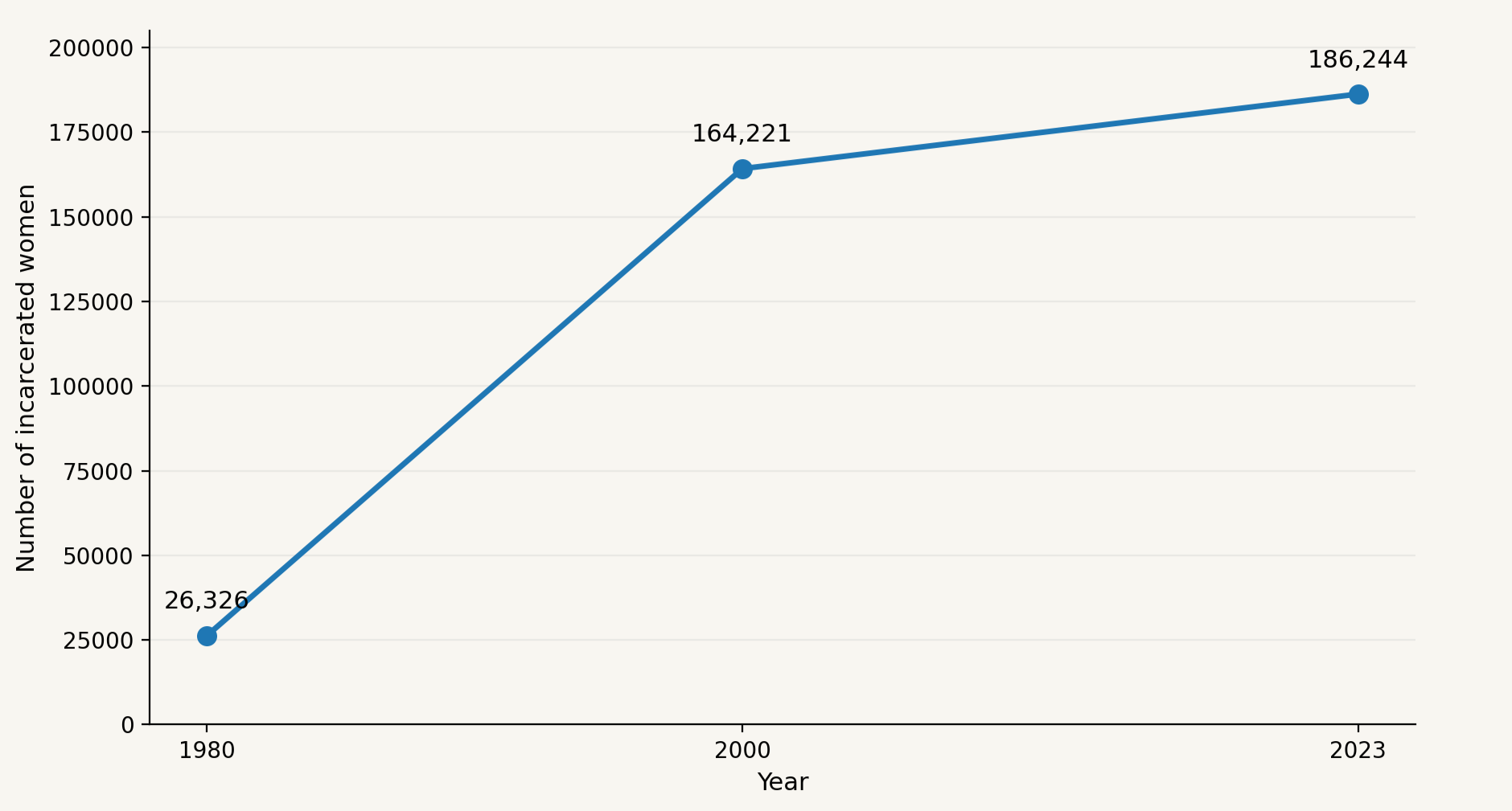
Rise in Women’s Incarceration
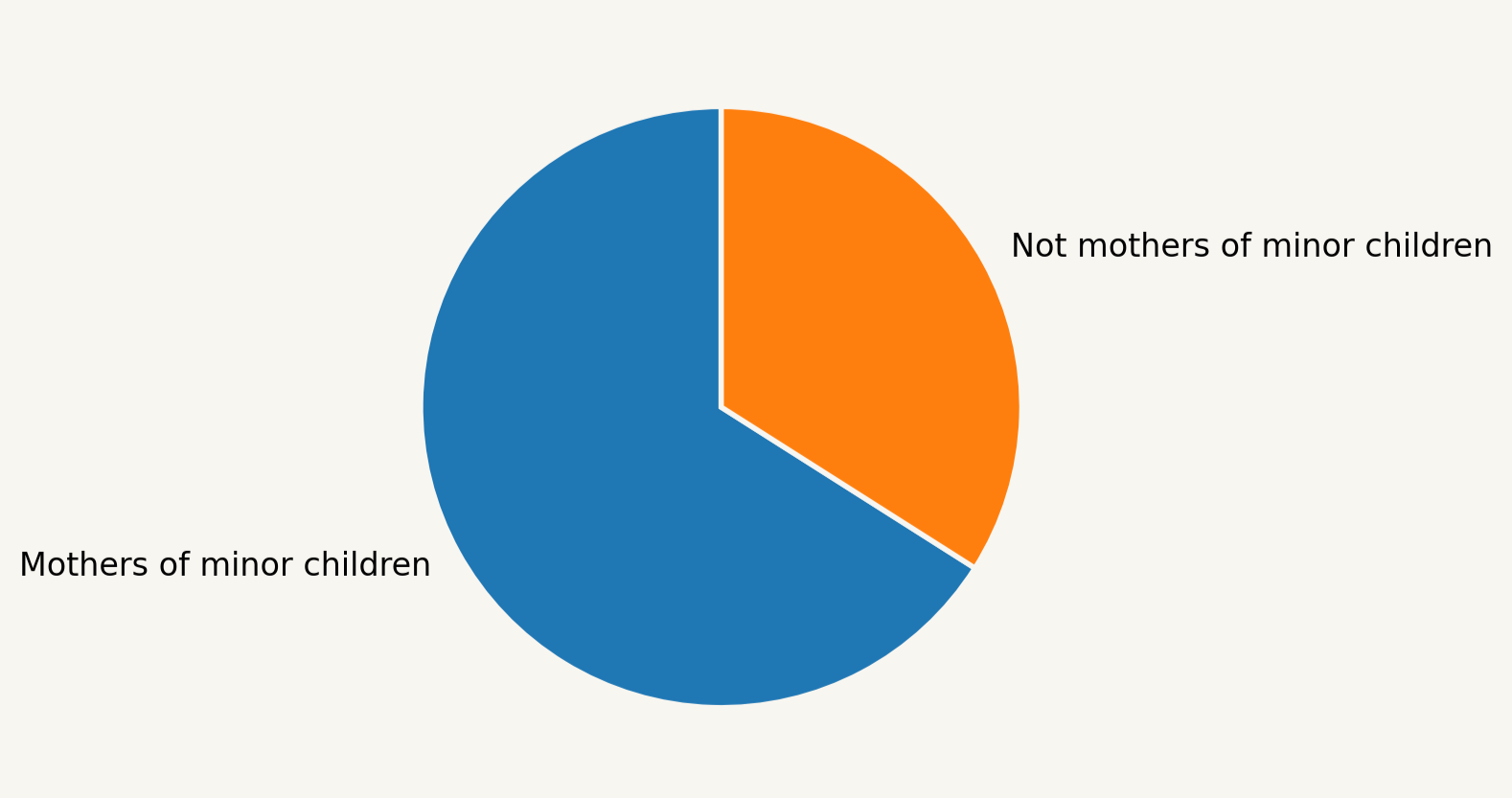
A System Built Around Men
Women are the fastest-growing segment of the incarcerated population, with their numbers increasing by more than 600% since 1980¹—a rate twice as fast as that of incarcerated men.² Yet men still comprise approximately 93% of the state and federal prison population,³ and correctional systems have historically been designed around their needs and experiences. While criminal justice reforms have helped to reduce men’s prison populations in most states, they have had little to no effect on the number of incarcerated women.4 This disparity highlights a fundamental challenge: systems built primarily around men are often ill-equipped to address the realities of women’s incarceration.
Women’s experiences in the criminal justice system differ significantly from those of men. Their pathways into incarceration, experiences while incarcerated, and challenges after release are shaped by histories of trauma and violence, caregiving responsibilities, health disparities, and systemic inequities. These differences have important implications for how women experience incarceration and what they need to successfully rebuild their lives after release.
Mental Health, Trauma, & Substance Use
The trauma and violence that many women experience before incarceration can have lasting effects on their mental health and well-being. Compared with incarcerated men, women are more likely to enter prison with histories of sexual abuse,5 childhood victimization, domestic violence, and other forms of trauma.6 These experiences can contribute to co-occurring mental health and substance use disorders and may influence patterns of involvement with the criminal justice system. Women are more likely to be incarcerated for drug and property offenses,7 while men are more likely to be incarcerated for violent crimes.8
These experiences are reflected in the significant mental health challenges faced by incarcerated women. Approximately 66% of women in prison and 68% of women in jail report having been diagnosed with a mental health condition, compared with 35% of men in prison and 41% of men in jail.9 Women are also more likely than men to experience psychological distress while incarcerated,10 report chronic medical and psychiatric conditions, and experience higher mortality rates while in jail.11
Substance use disorders are similarly prevalent. Approximately 60% of women report using drugs in the month before the offense that led to their incarceration,12 and nearly 70% of women in prison or jail meet the criteria for a substance use disorder.13
Despite the prevalence of these challenges, women’s specific mental health needs remain understudied and underserved. Addressing them requires more than treatment alone. Women need opportunities to understand their experiences, develop emotional awareness, build healthy relationships, and strengthen the skills necessary to navigate life beyond incarceration.
The Impact of Family Separation
For many women, the challenges of incarceration extend beyond their individual experiences. Nearly two-thirds of incarcerated women are mothers of minor children, and many were their children’s primary caregivers before incarceration.14 As a result, incarceration can have profound consequences for both women and their families.
Maintaining family connections during incarceration can be especially difficult. Women’s prisons are often located far from home, making visitation challenging and expensive. This separation can increase feelings of isolation, anxiety, and depression.15 For some mothers, incarceration may also contribute to the loss of parental rights when their children enter foster care, creating additional trauma and long-term family disruption.
Because strong relationships are central to successful reentry, supporting incarcerated also means supporting their families. Rebuilding trust, reconnecting with children, and restoring relationships can be essential parts of a woman’s transition home. Restorative approaches recognize that healing does not happen in isolation; it takes place within families and communities as well as within individuals.
Sexual Violence Before, During, and After incarceration
Sexual violence is a pervasive reality in the lives of incarcerated women. For many, incarceration occurs within a larger history of victimization that began long before their involvement with the justice system. Human Rights Watch estimates that at least half of all incarcerated women experienced sexual abuse before incarceration.16 Among women in jail, rates of prior victimization are even higher, with 86% reporting that they have experienced sexual violence at some point in their lives.17
Incarceration does not necessarily end this cycle of victimization. Women in prison are four times more likely than men to report sexual victimization by another incarcerated person, while women in jails are more than twice as likely.18 Sexual abuse in correctional facilities is perpetrated by both correctional staff and incarcerated individuals. The U.S. Department of Justice found that correctional officers were responsible for 68.6% of substantiated staff sexual misconduct in American prisons,19 and Human Rights Watch estimates that at least 15% of incarcerated women have experienced sexual assault while in prison.20
LGBTQ+ women face additional risks. They are overrepresented in the criminal justice system and experience higher rates of sexual abuse during incarceration than their heterosexual counterparts.21 Sexual assault is 13 times more prevalent among incarcerated transgender people.22
The prevalence of sexual trauma among incarcerated women underscores the importance of trauma-informed approaches that recognize the lasting impact of violence while creating opportunities for safety, healing, accountability, and growth. Without meaningful support, many women leave incarceration carrying the effects of both past and ongoing harm.
Reproductive Health and Bodily Autonomy
Although healthcare is notoriously inadequate for incarcerated individuals, women have distinct health needs—including menstrual care, menopause management, pregnancy and postpartum care, reproductive healthcare, and treatment for mental health and substance use disorders—that frequently go unmet within correctional facilities.23 Without access to proper care, many women lack the resources and support necessary to protect their health and well-being during incarceration and after release.
Women’s reproductive health needs have historically been overlooked within correctional systems—and, at times, directly harmed by them. Throughout the twentieth century, California’s eugenics program resulted in the involuntary sterilization of more than 20,000 people, the majority of whom were poor women, people of color, and individuals with disabilities.24
Although California repealed its eugenics laws in 1979, coerced sterilizations continued within its prison system for decades. A state audit found that at least 794 incarcerated women underwent medical procedures between 2005 and 2013 that could have resulted in sterilization. Of these women, 144 received bilateral tubal ligations performed solely for the purpose of sterilization.25 Additionally, 25% of these procedures were performed without signed consent forms and disproportionately affected Black and Latina women with low literacy levels.26
Today, incarcerated women continue to face barriers to reproductive healthcare, including access to access to menstrual products, pregnancy care, menopause treatment, and abortion services.27 Following the Supreme Court’s decision in Dobbs v. Jackson Women's Health Organization which eliminated the federal constitutional right to abortion, these barriers have become even more significant for women who face restrictions on their ability to travel. Formerly incarcerated women seeking abortion care in another state must obtain permission from their probation or parole officer before traveling, placing them at risk for further criminalization for either violating the conditions of their supervision or for getting an abortion itself.28
These barriers disproportionately affect women of color, who experience both higher incarceration rates and higher rates of unintended pregnancy and abortion.29 In recent years, the imprisonment rate for Black women has been approximately 1.7 times that of white women, while the rate for Latina women has been about 1.2 times higher than that of white women.30 At the same time, the abortion rate for Black women is almost five times that of white women, and the rate for Latina women is approximately twice as high.31
These realities demonstrate why women’s healthcare needs cannot be separated from questions of dignity, autonomy, and successful reentry. Supporting incarcerated women requires addressing the full range of circumstances that influence their ability to heal, rebuild, and participate fully in their communities.
Reentry
How ReEvolution Responds
The challenges facing incarcerated women cannot be addressed through programs designed for men or through one-size-fits-all approaches to rehabilitation. Women deserve restorative programming that recognizes the realities of their lives and provides opportunities for healing, accountability, growth, and connection.
ReEvolution provides gender-responsive, trauma-informed restorative programming for women during incarceration and throughout reentry. Our curriculum is designed specifically for women whose lives have been shaped by trauma, addiction, violence, family separation, and systemic barriers. Rather than focusing solely on behavior, we help participants understand the experiences that have shaped their involvement in the justice system while building the skills and confidence necessary to create meaningful change.
Inside women’s prisons, our classes explore the cycle of harm, restorative justice, leadership, self-discovery, emotional wellness, and healthy relationships. Women are encouraged to examine their experiences, take responsibility for their choices, strengthen their resilience, and develop the tools needed to navigate life beyond incarceration.
Our work continues after release through reentry support, women's groups, and individualized mental health and substance use services. These programs help women reconnect with their families, build healthy support systems, and establish stability in their communities.
We also believe that women's voices belong at the center of conversations about incarceration. Through our storytelling initiative, incarcerated and formerly incarcerated women share their experiences in their own words, challenging stereotypes and helping communities better understand the realities of women's incarceration.
Supporting incarcerated women requires more than addressing the immediate conditions of confinement. It means recognizing the experiences that shape women’s lives before, during, and after incarceration and investing in the relationships, resources, and opportunities that allow them to heal and rebuild. When women have opportunities to heal, lead, and be heard, the impact extends far beyond the individual. Families are strengthened, communities become healthier, and cycles of harm can be broken.
That is the work of ReEvolution.